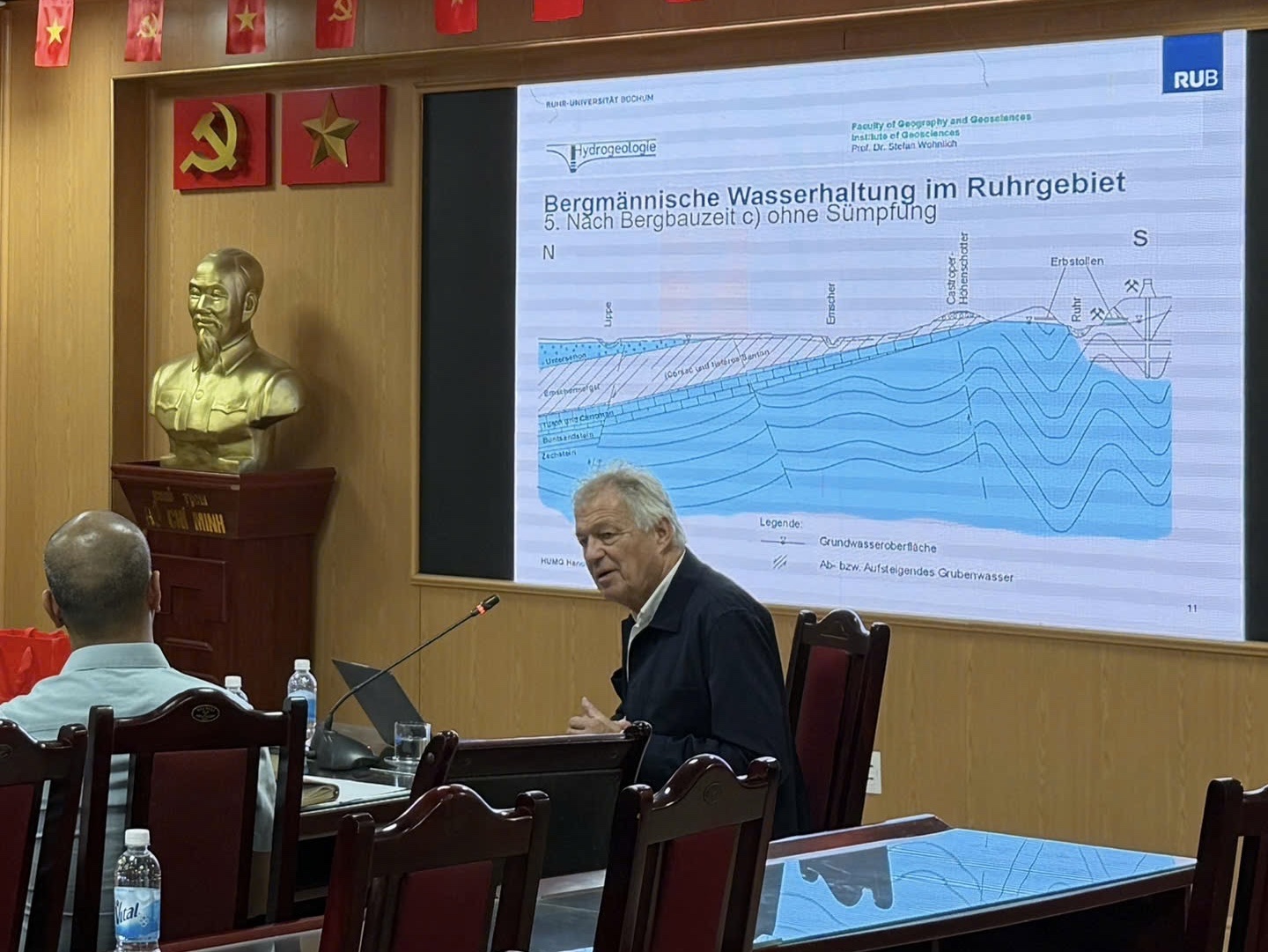
Professor Stefan Wohnlich discussed the environmental challenges following coal mine closures in the Ruhr region
The seminar also offered an opportunity to reflect on the academic collaboration between Professor Wohnlich and HUMG. He supervised the doctoral research of Dr Tran Quang Tuan, a lecturer in the Department of Hydrogeology, who completed his PhD in 2022. The two researchers have also collaborated on studies of water quality and environmental conditions at closed coal mines in the Ruhr region, with their findings published in international scientific journals.
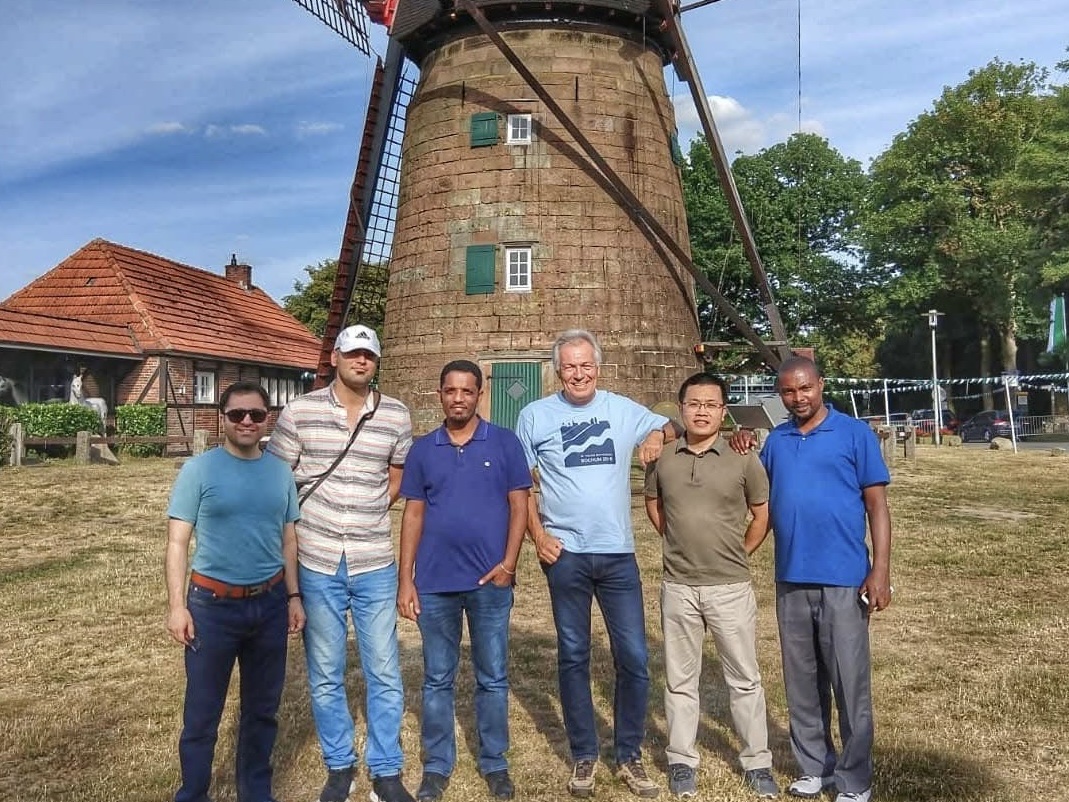
Professor Stefan Wohnlich (third from right) posed for a photo with Dr Tran Quang Tuan (second from right) and his fellow students during Dr Tuan’s doctoral studies in Germany
During the seminar, Professor Wohnlich examined changes in the groundwater system resulting from more than a century of coal mining in the Ruhr region. Mining has altered the hydrological regime and caused land subsidence in many areas, requiring mine water pumping and management to continue long after the mines have closed.
Alongside these environmental challenges, he highlighted the potential for recovering geothermal energy from former mine workings. “One of the approaches we are currently investigating is to harness energy from closed coal mines to meet heating needs above ground,” he explained. This approach puts existing mining infrastructure to new use while helping to reduce dependence on fossil fuels.
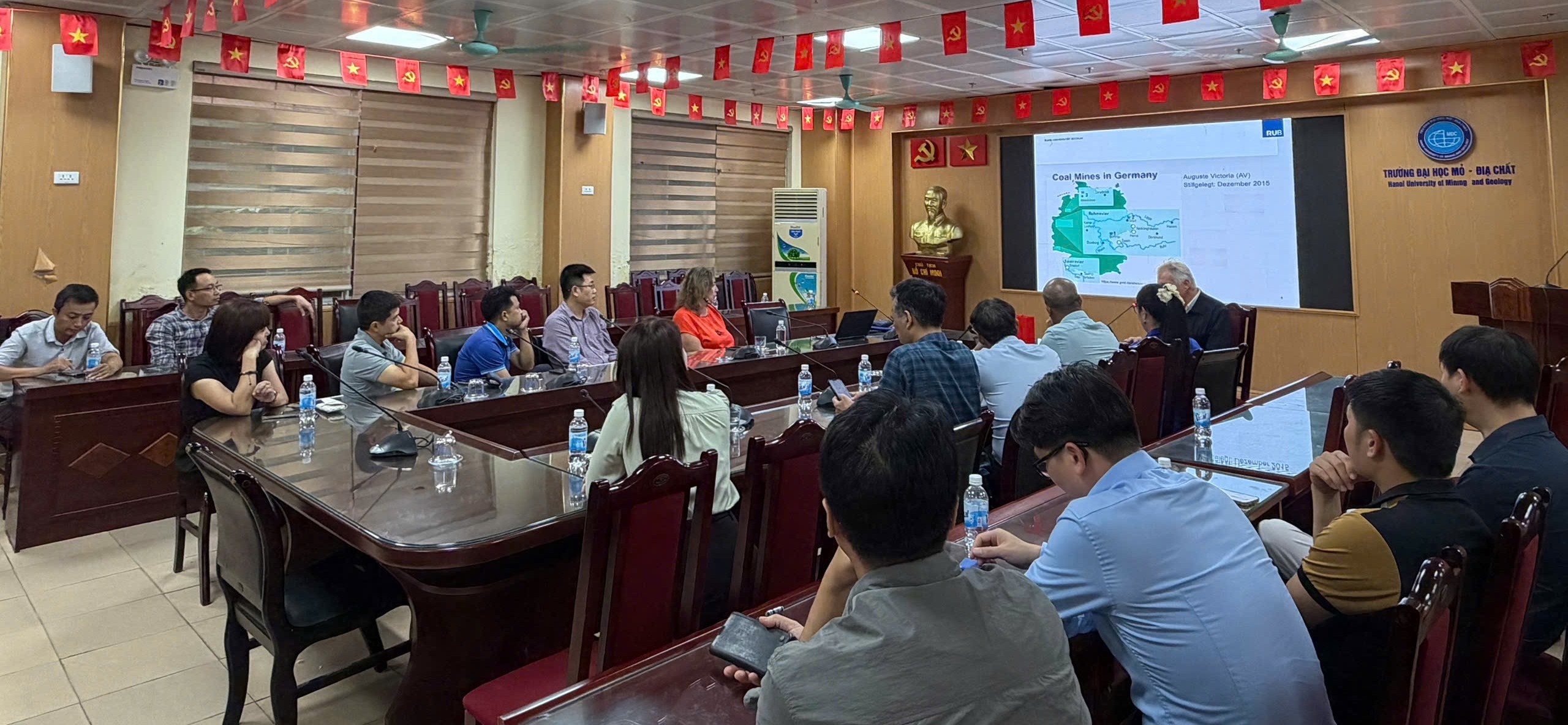
An overview of the seminar
The discussion prompted numerous technical questions, notably about funding for mine closure and post-mining environmental management. Drawing on Germany’s experience, Professor Wohnlich discussed the financial responsibilities of mining companies, particularly the need to secure funding in advance for long-term environmental obligations. A prominent example is RAG-Stiftung, a foundation established in 2007 with assets derived from the RAG Group’s business operations. The foundation’s investment returns finance mine water management, flood prevention in areas affected by subsidence, and the treatment of contaminated groundwater.
The Ruhr region’s experience is directly relevant to HUMG’s strengths in education and research, including hydrogeology, mining engineering and environmental protection. For Vietnam, particularly long-established coal mining areas such as Quang Ninh, it offers valuable lessons in mine water management, environmental rehabilitation and the reuse of post-mining infrastructure.
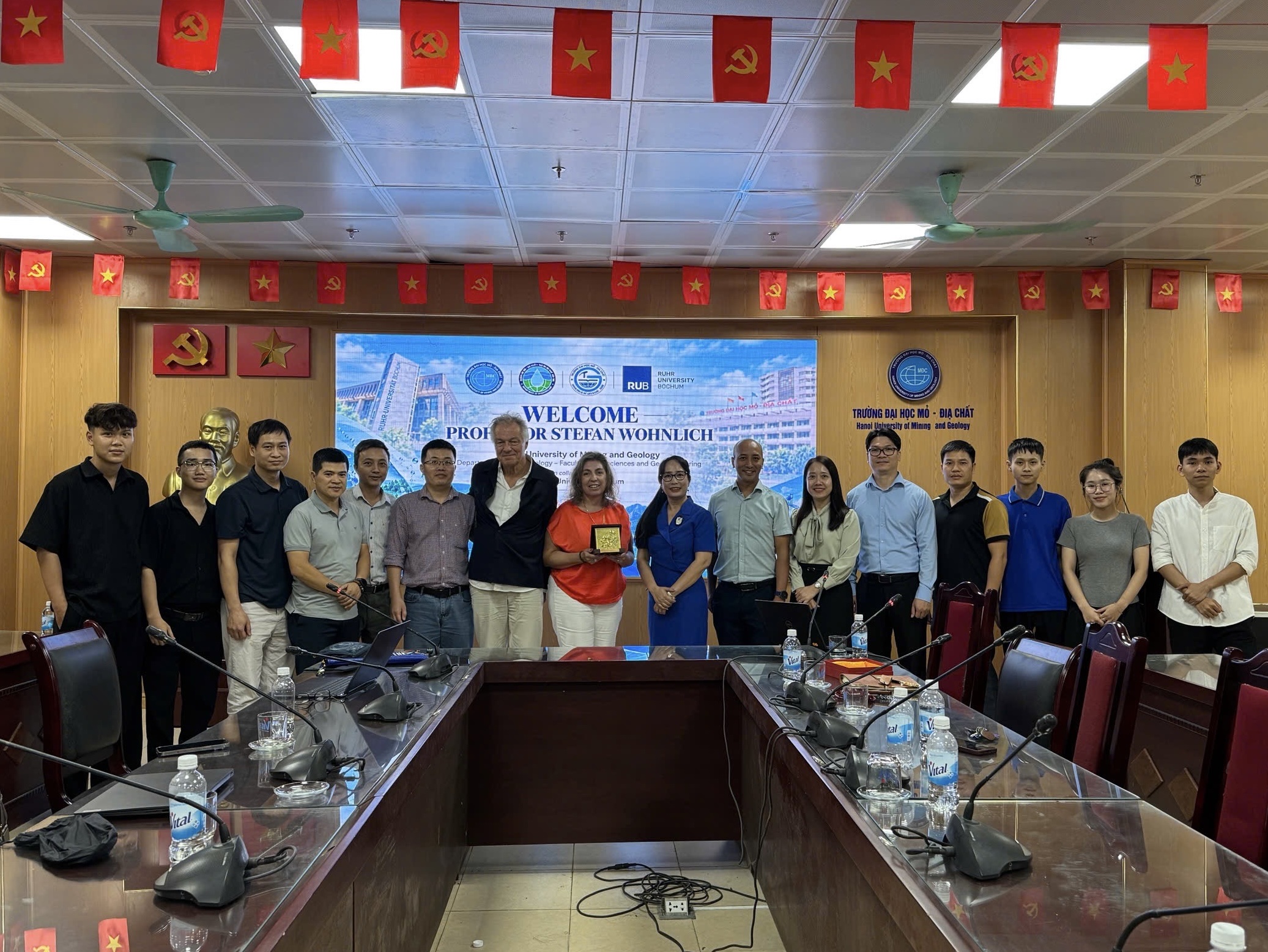
Professor Stefan Wohnlich posed for a group photo with HUMG lecturers and students after the seminar
The Ruhr region’s story demonstrates how post-mining challenges can also create opportunities to develop new environmental and energy solutions. The seminar offered HUMG lecturers and students additional scientific insights while strengthening academic connections between Vietnamese and German researchers.