The programme began with a three-day field survey at several notable geological sites in northern Vietnam, including the Lang Son UNESCO Global Geopark and Ha Long Bay, under the guidance of lecturers from Hanoi University of Mining and Geology. These field activities provided students with valuable opportunities to observe geological formations and natural processes firsthand while strengthening their understanding of key concepts in Earth Sciences.
At the Lang Son UNESCO Global Geopark, HUMG lecturers guided the CUPB students in field investigations at several notable locations, including the “Yen Binh Ancient Ocean” site, Dong Lam Valley, Na Lay Peak, Bai Da Nhay, and the “Na Duong Lake World” fossil site. The delegation also visited the Geopark Information Center at the Bac Son Uprising Museum.
Through direct observation of ancient sedimentary layers, marine fossils, karst landscapes, and distinctive geomorphological features, students were able to connect theoretical knowledge with real geological formations while gaining deeper insights into the geological evolution of northeastern Vietnam.
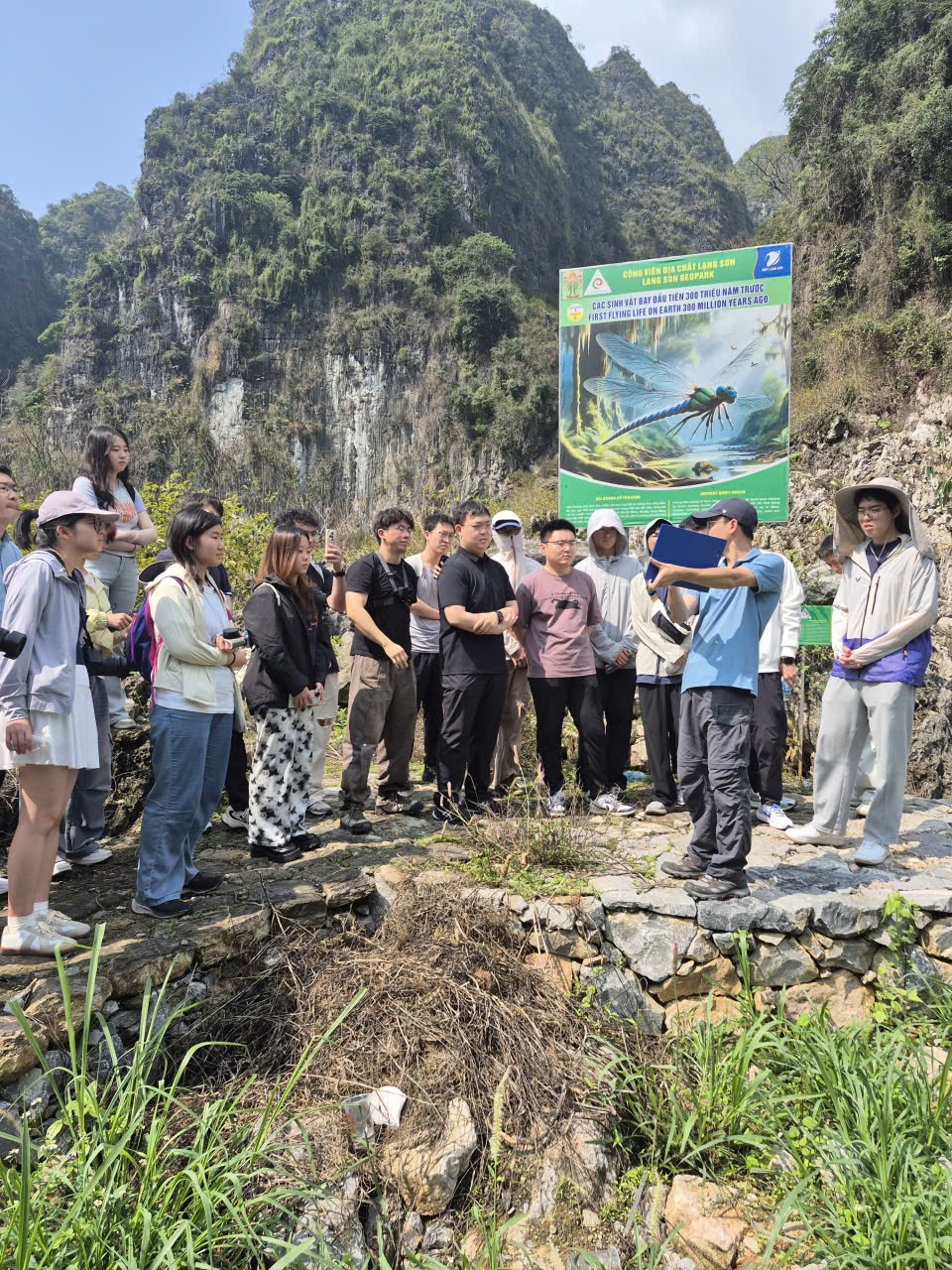
Students from China University of Petroleum – Beijing conducted field observations at the “Yen Binh Ancient Ocean” site under the guidance of HUMG lecturers.
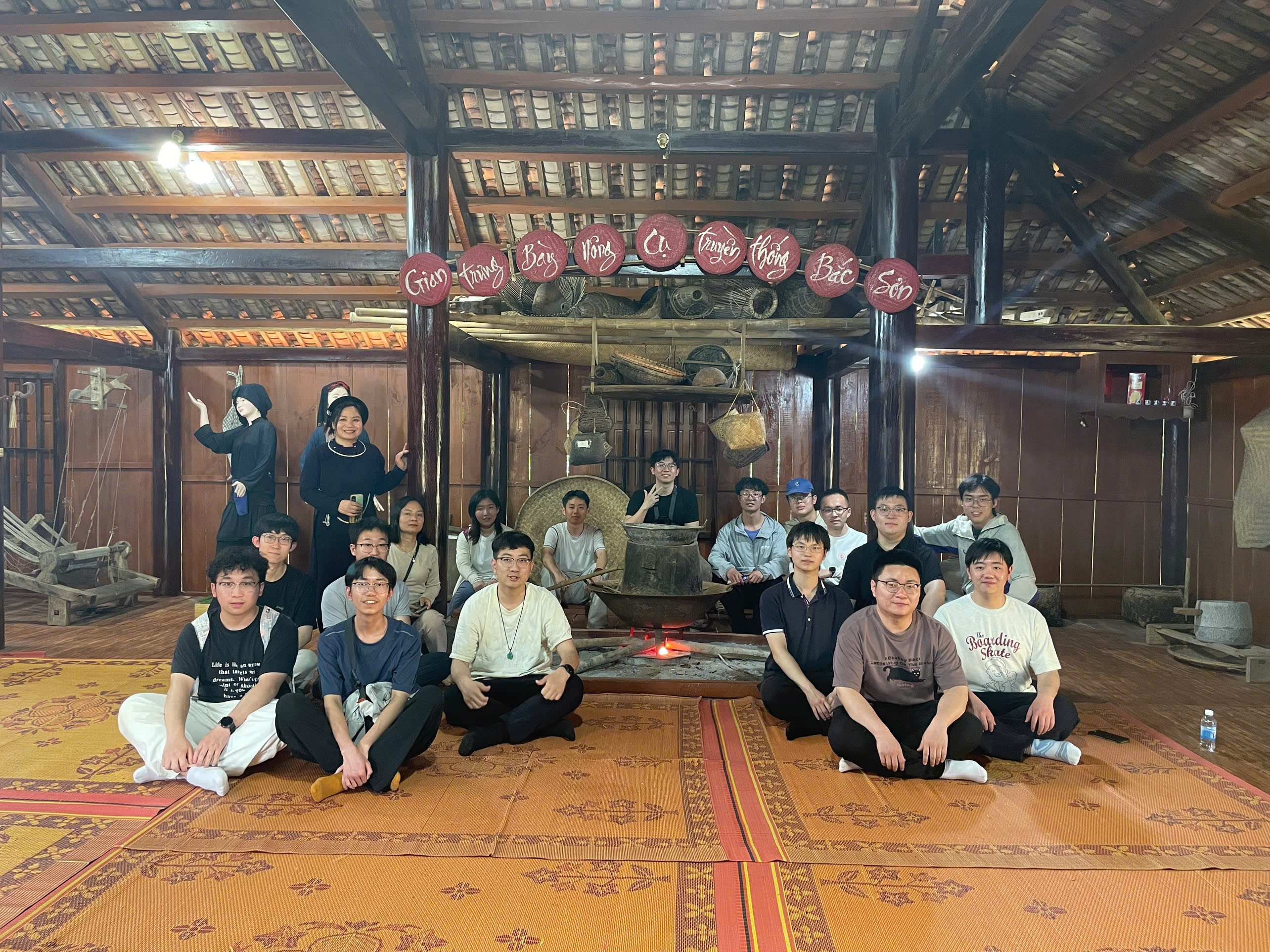
The delegation from China University of Petroleum – Beijing visited the Geopark Information Center at the Bac Son Uprising Museum.

Students from China University of Petroleum – Beijing investigated karst landforms at Bai Da Nhay in the Lang Son UNESCO Global Geopark.
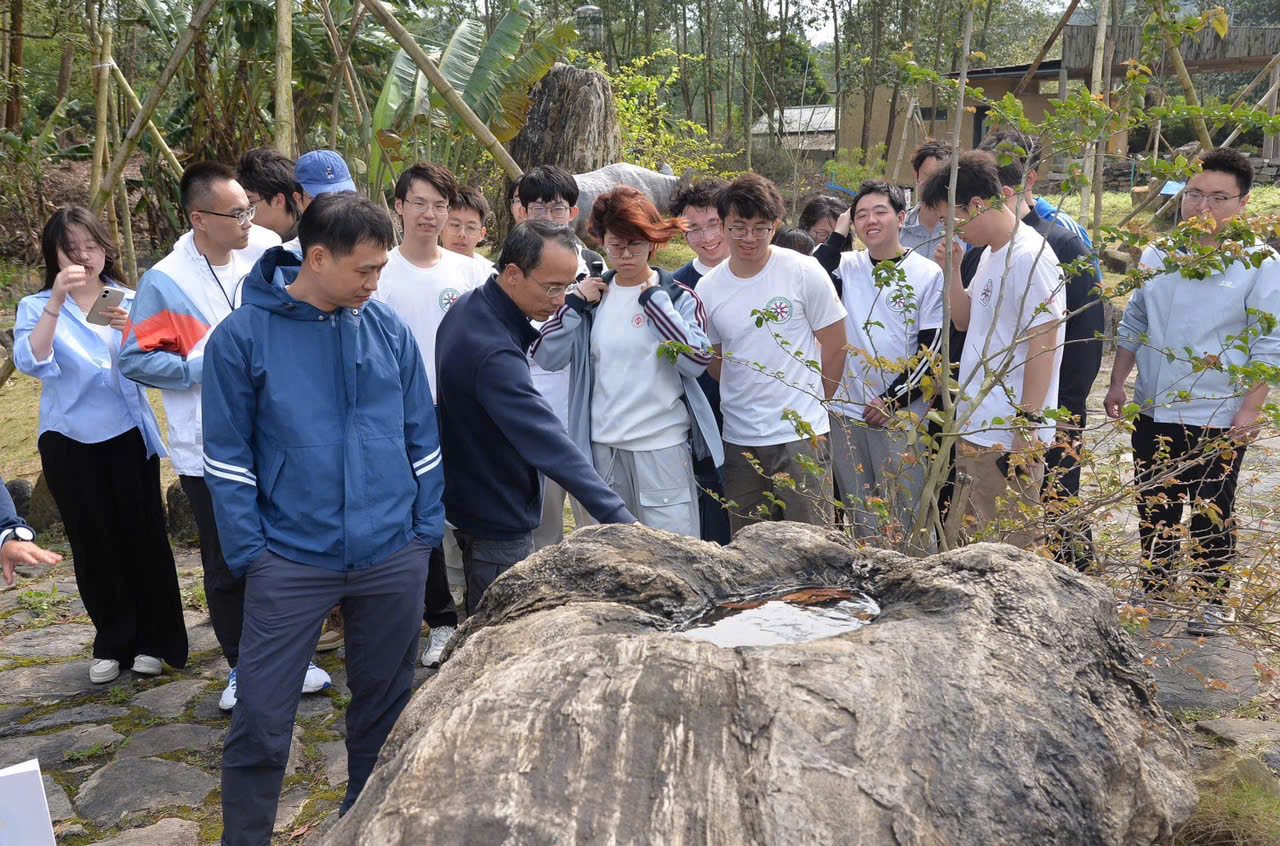
CUPB students studied fossilized tree trunks at the “Na Duong Lake World” fossil site in the Lang Son UNESCO Global Geopark under the guidance of HUMG lecturers.
The next destination of the field trip was Ha Long Bay, a UNESCO World Natural Heritage Site renowned for its spectacular marine karst landscape. Field observations at the site enabled students to better understand the processes of karst weathering, dissolution, and tectonic activity that have shaped the distinctive geological landscape of the region.
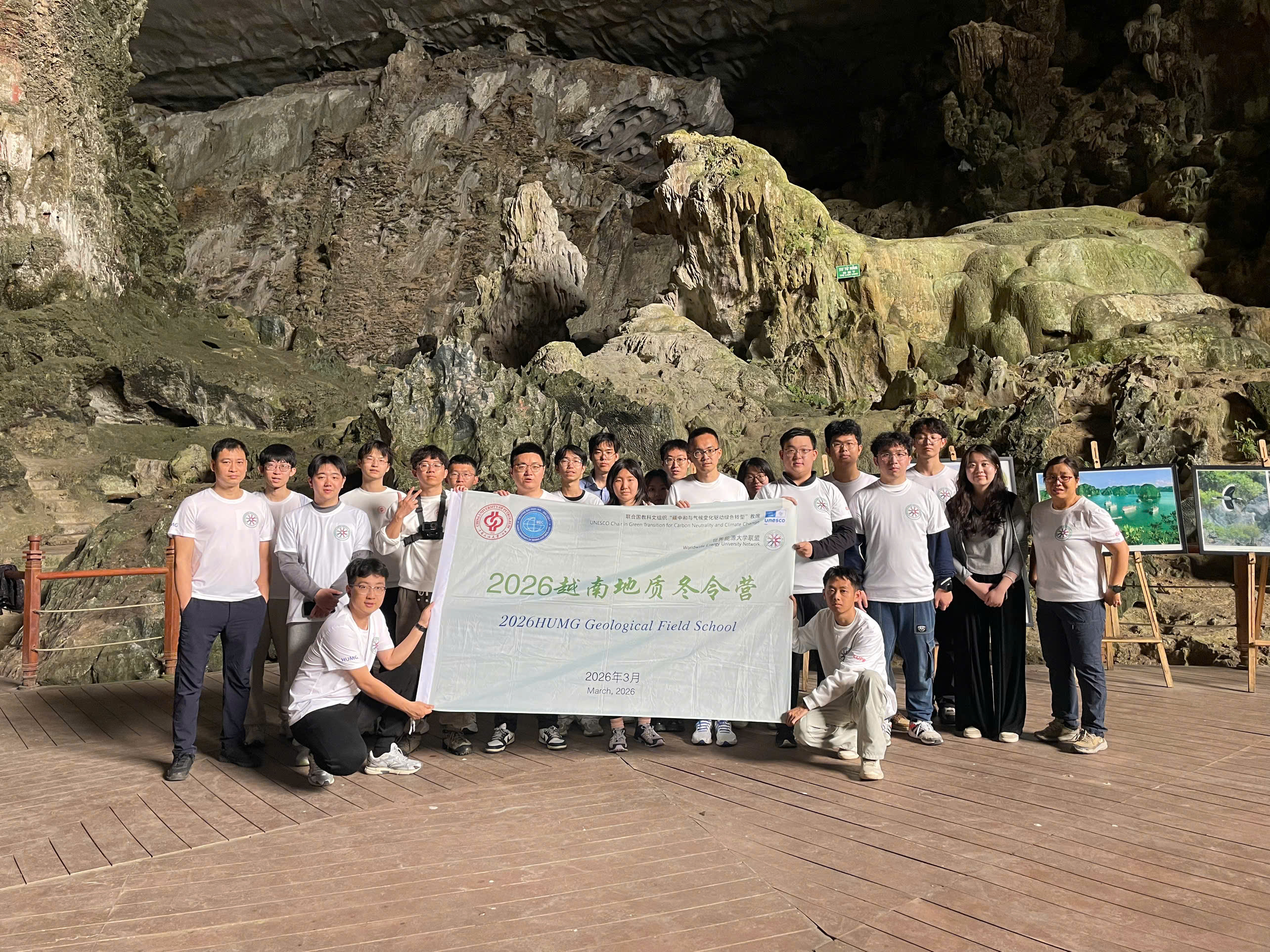
Students from China University of Petroleum – Beijing studied the marine karst system at Ha Long Bay.
In addition to field-based learning in Earth Sciences, the CUPB students also had the opportunity to experience Vietnamese culture and history in Hanoi. Together with Vietnamese students, the delegation visited the Temple of Literature – Imperial Academy, Ba Dinh Square, and the Hanoi Old Quarter, gaining insights into Vietnam’s long-standing educational traditions and the historical and cultural heritage of the capital.
The visit not only helped international students better understand the historical and cultural context of Vietnam but also created valuable opportunities for interaction and exchange between Vietnamese and Chinese students, fostering greater mutual understanding.
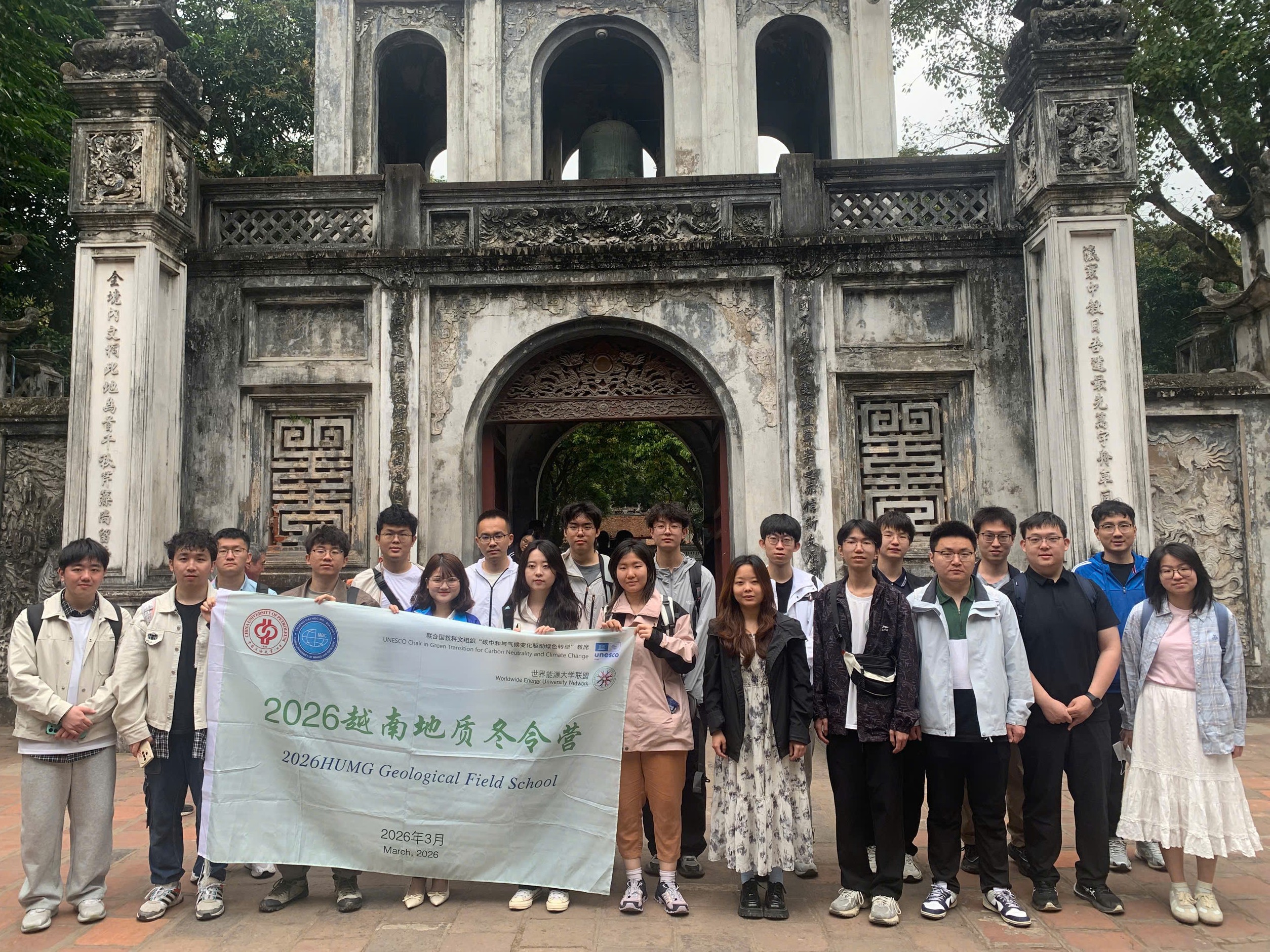
The delegation from China University of Petroleum – Beijing visited the Temple of Literature – Imperial Academy in Hanoi during their cultural visit.
The programme left strong impressions on both lecturers and students participating in the delegation.
Student Huang Mouyang from China University of Petroleum – Beijing shared:
“We are very grateful to Hanoi University of Mining and Geology for organizing such a meaningful field programme. Under the guidance of HUMG lecturers, we had the opportunity to gain deeper insights into geology through field surveys in Lang Son Geopark, Ha Long Bay, and Hanoi.”
Ms. Zhang Xinyi, the faculty leader from China University of Petroleum – Beijing, stated:
“We sincerely appreciate the warm hospitality of Hanoi University of Mining and Geology. The field experiences in Vietnam were truly impressive, and we hope that the two universities will continue to expand cooperation in the future.”
The WEUN HUMG Geological Field School 2026 not only provided valuable hands-on learning experiences for international students but also strengthened cooperation between Hanoi University of Mining and Geology and China University of Petroleum – Beijing. Through field research activities and academic exchange, the programme created further opportunities for academic collaboration and student mobility among universities within the Worldwide Energy University Network (WEUN). The programme also reaffirmed HUMG’s role as an active member of WEUN in promoting international academic exchange in the fields of Earth Sciences, Energy, and Natural Resources.