The seminar brought together representatives from HUMG’s academic units, including the Faculty of Electro-Mechanics and the Faculty of Petroleum and Energy, along with numerous staff members, lecturers, and students. Guests included energy experts from the Asia Pacific Energy Research Centre (APERC) and representatives from the Institute of Mining Science and Technology.
In the overview presentation, Mr. Mitsuhito Takada, Vice President of APERC, delivered key analytical findings from APERC’s latest energy demand–supply assessment. He emphasized that electricity demand in the APEC region continues to grow rapidly and exhibits pronounced seasonal variability, creating new operational requirements as the share of variable renewable energy (VRE) rises. The rapid deployment of wind and solar power increases reliance on flexible generation resources, which are essential for maintaining frequency stability and ensuring system reliability. He also highlighted significant differences in projected CO₂ reductions across scenarios, underscoring the decisive role of accelerated low-carbon technology deployment and the effectiveness of policy implementation.

Mr. Mitsuhito Takada – Vice President of APERC – presenting the overview analysis of energy trends in the APEC region
In the Vietnam-focused session, Mr. Phung Quoc Huy, Senior Researcher at APERC, noted that the industrial sector will remain the country’s largest energy consumer. Solar and wind power are expected to play an increasingly important role in the national generation mix before 2040, requiring the system to expand flexible capacity to accommodate significant net-load variability. He also analyzed the long-term potential of hydrogen and ammonia in carbon-neutral pathways while stressing challenges related to cost, efficiency, and large-scale deployment conditions.

Mr. Phung Quoc Huy – Senior Researcher at APERC – presenting the analysis for Vietnam
The discussion session featured insightful comments from participants regarding the technical requirements of the ongoing energy transition. Key topics included system stability under high VRE penetration, emerging load impacts from artificial intelligence applications and data centers, the feasibility of hydrogen and ammonia considering efficiency–cost trade-offs, and the need for flexible generation and advanced grid-control solutions. These discussions helped clarify several critical challenges and suggested promising research directions relevant to Vietnam’s evolving power-system landscape.
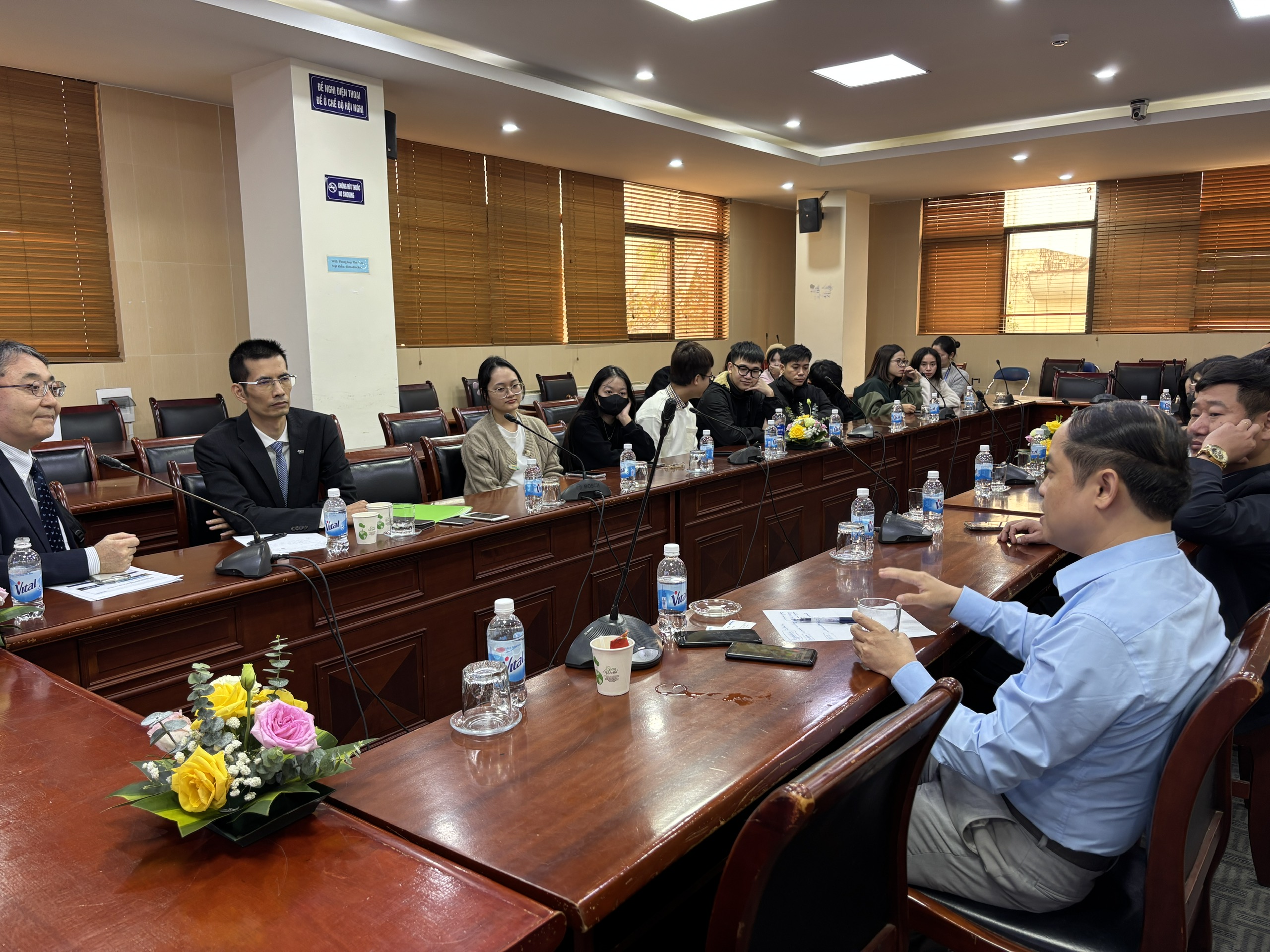
Overview of the Seminar “APEC Energy Demand and Supply Outlook”
The seminar also underscored opportunities for interdisciplinary approaches, including power-system optimization, assessment of emerging clean-energy technologies, and the development of long-term energy forecasting models to support evidence-based policymaking. The insights exchanged at the event open up opportunities for enhanced research collaboration between HUMG and APERC, particularly in power-system modeling, clean-energy technology assessment, and sustainable energy-transition solutions.
The event further reaffirmed HUMG’s role in energy research and education and creates momentum for the University to strengthen its analytical capabilities and contribute more effectively to Vietnam’s sustainable energy-transition efforts in the coming years.
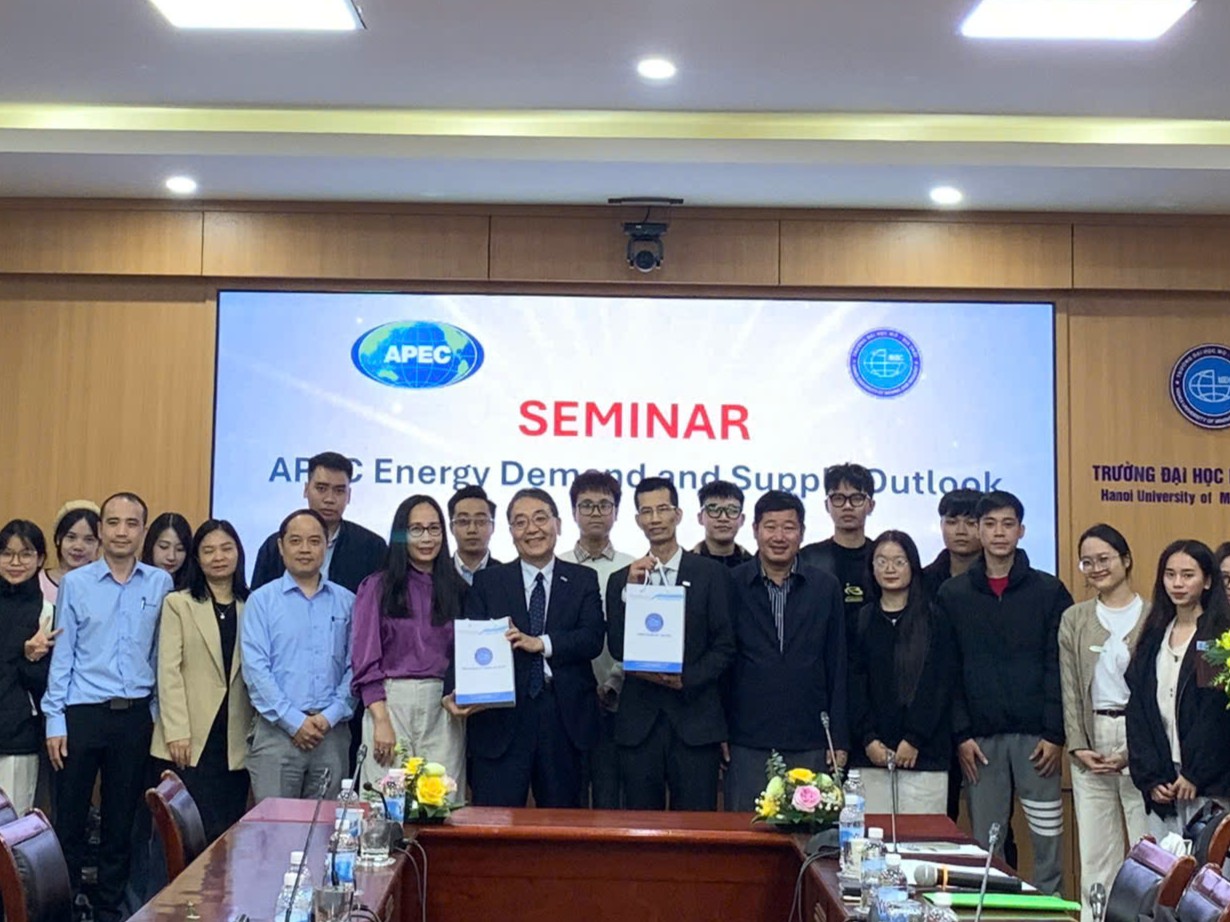
Delegates attending the seminar took a group photo