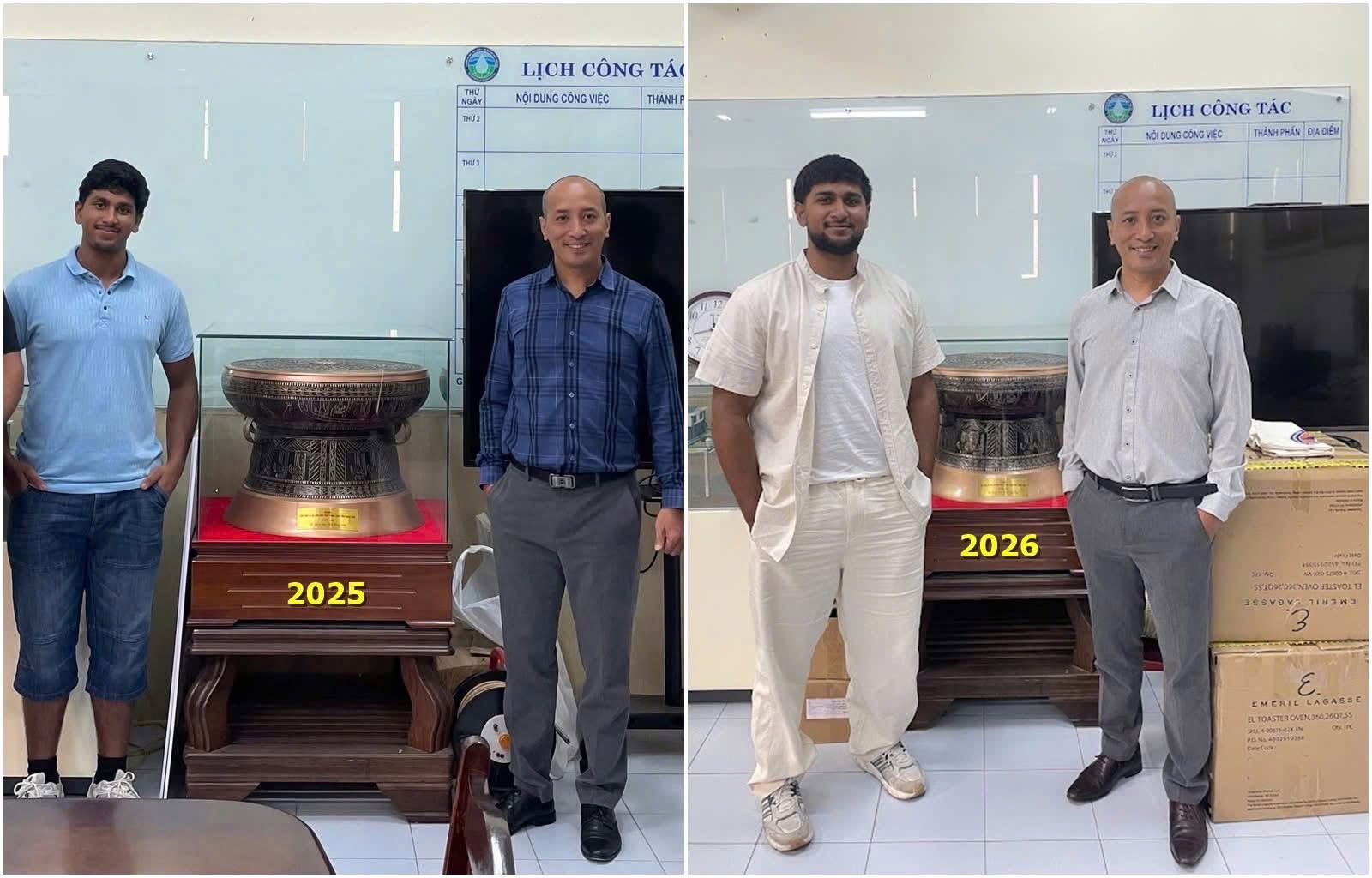
Brothers Rivin Migel Arachchige (2025, left) and Rajeen Migel Arachchige (2026, right), students from CESI Nanterre, France, who participated in exchange programmes at HUMG under the supervision of Dr. Nguyen Bach Thao
Their story offers a glimpse into the international exchanges taking place at HUMG. Since the beginning of 2026, the University has welcomed international students from France, Germany, India, China, Australia, Japan and many other countries, recording nearly 200 student participations in exchange, research, short-term study and cultural engagement activities, alongside international students pursuing full degree programmes. Some stay for only a few days; others spend years of their youth here. However different their time at HUMG may be, each experience adds a personal story about the University and Vietnam.
When Vietnam Becomes an Extended Classroom
At HUMG, international students have opportunities to study, conduct research and exchange academic knowledge with lecturers across various faculties, departments and laboratories. From lectures at the Department of Electrification to exploring geological maps and specimens at the Geological Museum, students engage with specialised knowledge and a variety of research methods.

International students attending a lecture at the Department of Electrification, Hanoi University of Mining and Geology

International students studying a geological map of Vietnam during a learning session at the Geological Museum, Hanoi University of Mining and Geology
Beyond the classroom, field excursions bring students to geological heritage sites and landscapes shaped by Earth's long history. At Lang Son UNESCO Global Geopark, Ha Long Bay and the Dong Van Karst Plateau, concepts once encountered in textbooks come to life through direct observation and investigation of geological formations and natural landscapes. At Lang Nu Village in Lao Cai Province, lecturers and students from Yamaguchi University, Japan, worked alongside HUMG on geological field investigations and the study of natural hazard risks, demonstrating the practical significance of scientific research for community safety.
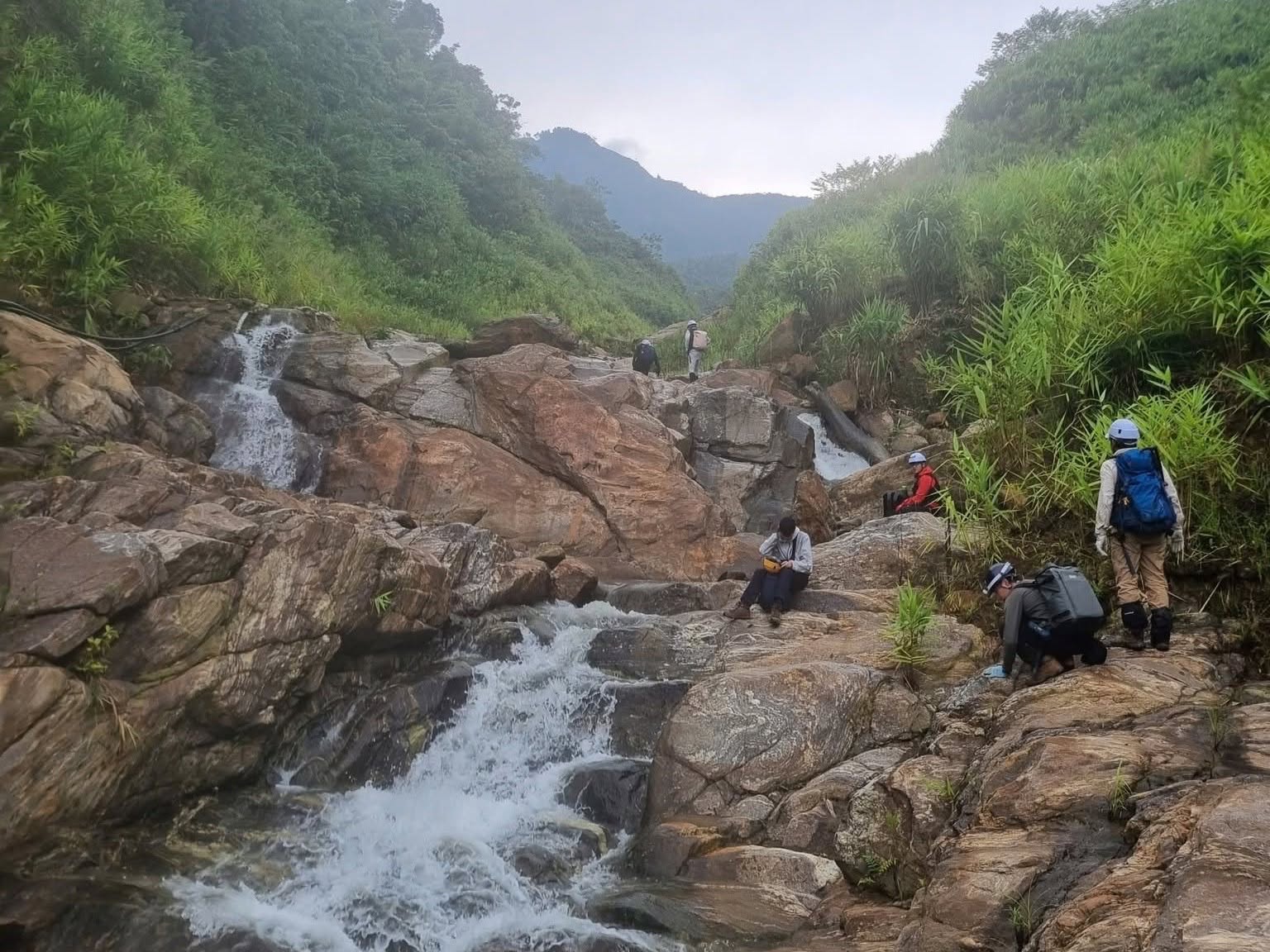
Lecturers and students from Yamaguchi University, Japan, together with HUMG lecturers, conducting geological field investigations along a stream in Lang Nu Village, Lao Cai Province
International students also gain first-hand experience of industrial operations at representative mining sites, including Ha Lam Coal Joint Stock Company and Mao Khe Coal Company in Quang Ninh Province; Khanh Hoa Coal Mine and Nui Phao Polymetallic Mine in Thai Nguyen Province; and Nam Cong Limestone Quarry in Ninh Binh Province. These visits offer insights into geological characteristics, mining technologies, occupational safety requirements and environmental protection, while helping students understand the challenges of sustainable resource extraction and utilisation.

An international student conducting field measurements at Nam Cong Limestone Quarry, Ninh Binh Province
Beyond the Textbooks
Outside their academic activities, international students discover Vietnam and its people through excursions and cultural experiences. From the historical landmarks of the Imperial Citadel of Thang Long and the Temple of Literature to the scenery of Ha Long Bay, each journey reveals another aspect of Vietnam's rich cultural heritage and natural beauty.

A delegation from China University of Petroleum, Beijing, visiting the Temple of Literature in Hanoi
At HUMG, international students have joined members of the University's Environment Club in decorating traditional Vietnamese conical hats. For those studying at the University over longer periods, Lunar New Year celebrations offer opportunities to experience the festive atmosphere of Tet alongside lecturers and friends.
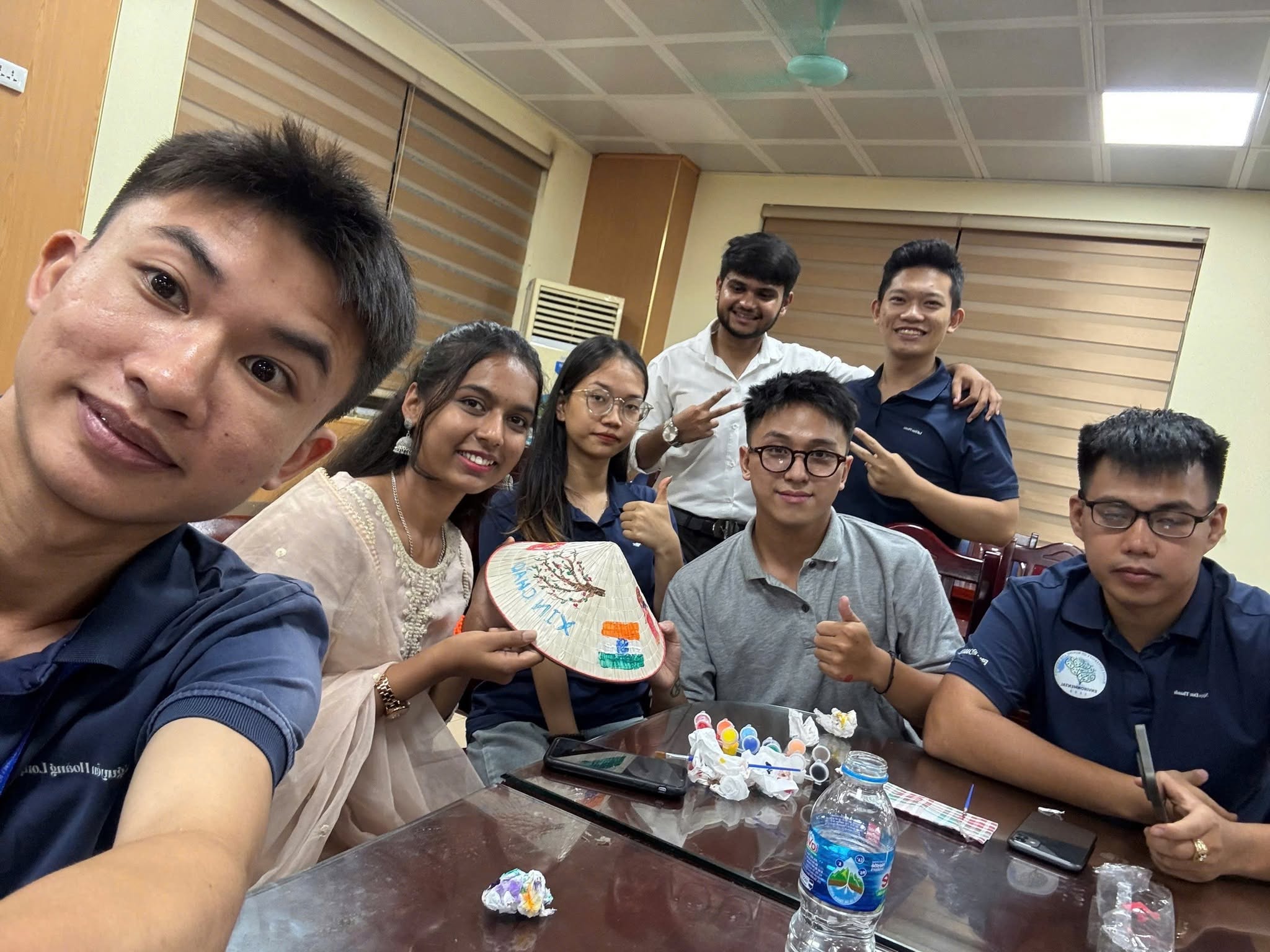
International students and members of the HUMG Environment Club decorating traditional Vietnamese conical hats during a cultural exchange programme
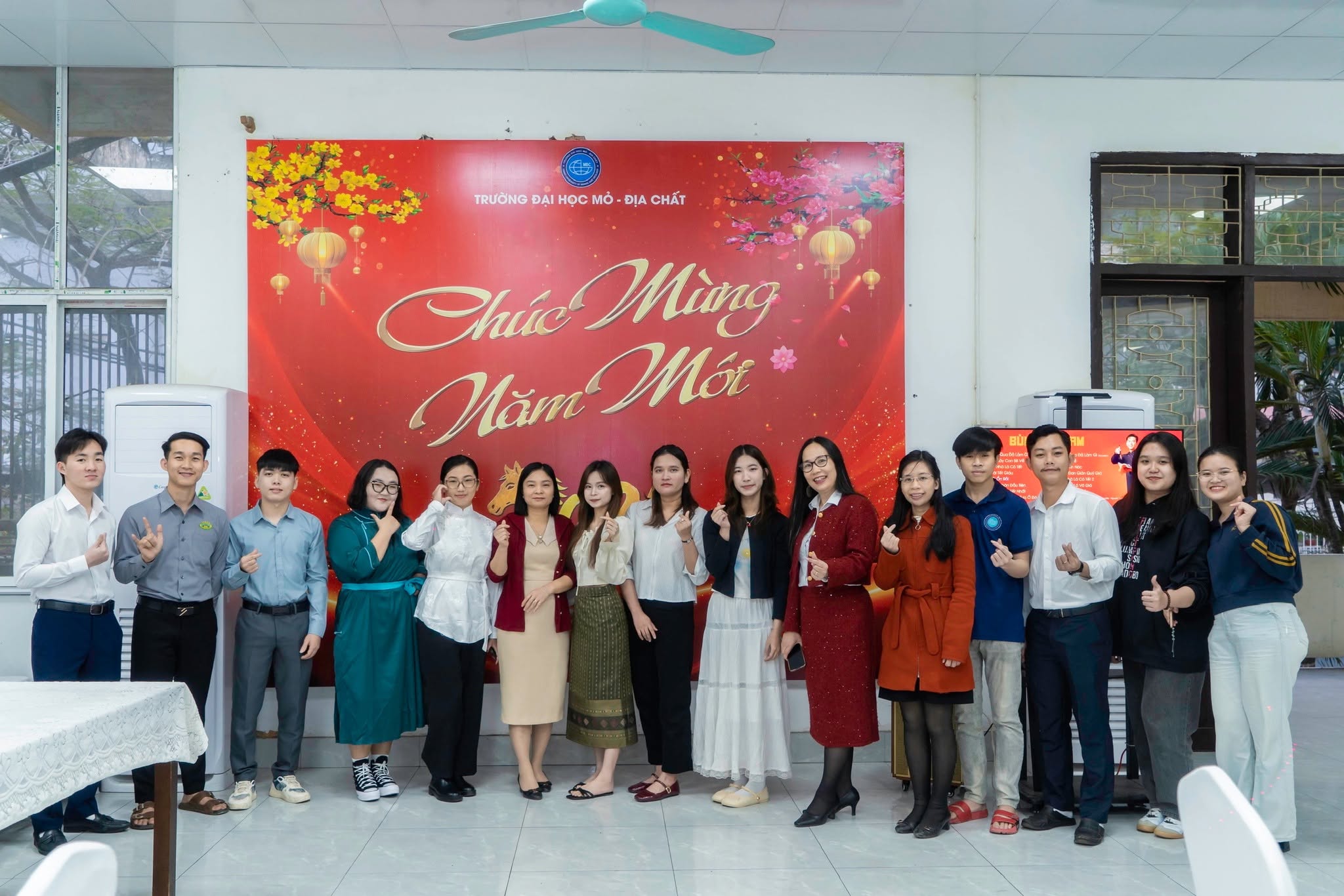
International students participating in a traditional Vietnamese Lunar New Year celebration at Hanoi University of Mining and Geology in 2026
Sometimes, the most memorable experiences begin with the simplest moments: sharing a bowl of pho with Vietnamese friends or enjoying friendly conversations outside the classroom. These everyday encounters help bridge the distance between young people from different countries, making their time in Vietnam feel more familiar and memorable.
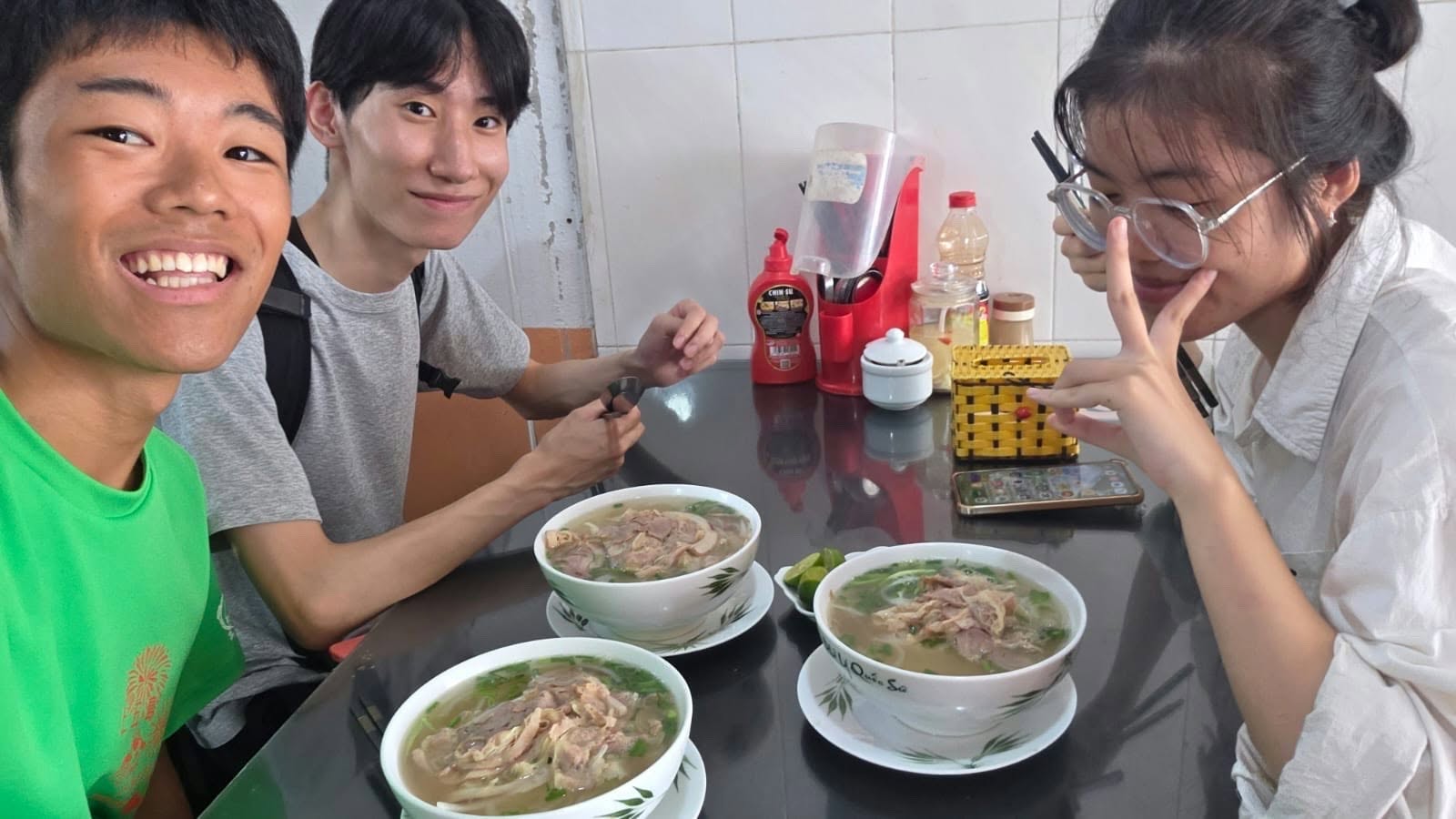
Two students from Kyushu University, Japan, enjoying pho in Hanoi with a HUMG student
Reflecting on his first days in Vietnam, Thibault Wu, a postgraduate student at Centrale Méditerranée, France, shared:
"When I first arrived in Vietnam, I was surprised to see motorcycles everywhere, even among students. But my most memorable experience so far has been being invited to lunch with the lecturers from HUMG's Department of Petroleum Equipment and Engineering Structures. Everyone was incredibly welcoming, even though I don't speak Vietnamese."
The learning goes both ways. While international students gain new experiences during their time at HUMG, Vietnamese students also have much to learn from their friends from abroad. Through classes, research activities and everyday conversations, differences in language, culture and perspectives become opportunities for young people to understand one another, learn together and grow.
Stories That Continue Beyond Borders
When their programmes come to an end, international students continue along their own paths, taking with them new knowledge, experiences and stories of Vietnam. Their days at HUMG may become part of the memories of their youth. And when they return home and look back on their journeys, there may still be a university in Vietnam they remember with affection.
As HUMG celebrates its 60th anniversary (1966–2026), these encounters and lasting connections have become part of the University's story, alongside its achievements in education and scientific research.
Some come only once. Some return. Others follow a path first taken by someone in their family.
And so, the story of HUMG continues to be told, in many languages, from distant corners of the world.